• Zur Metanavigation
  • Zur Hauptnavigation
  • Zur Suche
  • Zum Inhalt
  • Zur Subnavigation
  • Zum Seitenfuß
  • Universität Hamburg
  • Presse
  • KUS-Portal0
  • STiNE
https://www.kus.uni-hamburg.de/aktuelles.json?recentnews=true
  • Einrichtungen und Zielgruppen
    • Einrichtungen
      • Fakultäten

        • Fakultät für Rechtswissenschaft
        • Fakultät für Wirtschafts- und Sozialwissenschaften
        • Medizinische Fakultät
        • Fakultät für Erziehungswissenschaft
        • Fakultät für Geisteswissenschaften
        • Fakultät für Mathematik, Informatik und Naturwissenschaften
        • Fakultät für Psychologie und Bewegungswissenschaft
        • University of Hamburg Business School
      • Dienste

        • STiNE
        • Surfmail
        • Exchange
        • KUS-Portal
        • Lernplattformen
        • Katalogplus
        • SharePoint
      • Einrichtungen für Studierende

        • Campus-Center
        • Career-Center
        • PIASTA
        • AStA
        • Hochschulsport
        • Universitätsmusik
        • Familienbüro
        • Sprachenzentrum
        • Allgemeinsprachen
        • Koordination der Belange von Studierenden mit Beeinträchtigungen
        • Bibliotheken
        • Healthy Campus
      • Weitere Einrichtungen

        • Exzellenzcluster CLICCS
        • Exzellenzcluster CUI
        • Exzellenzcluster Quantum Universe
        • Exzellenzcluster Understanding Written Artefacts
        • Hamburg Research Academy
        • Pier Plus
        • Hamburger Zentrum für Universitäres Lehren und Lernen (HUL)
        • Hub for Crossdisciplinary Learning (HCL)
        • Centrum für Erdsystemforschung und Nachhaltigkeit (CEN)
        • Museen und Sammlungen
        • Universitätsarchiv
        • Regionales Rechenzentrum (RRZ)
        • Präsidialverwaltung
        • Transferagentur
        • Unikontor
    • Zielgruppen

      • Studieninteressierte
      • Studierende
      • Internationale
      • Promovierende
      • Forschende
      • Lehrende
      • Beschäftigte (KUS)
      • Weiterbildungsinteressierte
      • Alumni
      • Presse
      • Geflüchtete
    Schließen
  • Gebärdensprache
  • Leichte Sprache
  • /sitemap.json
    GebärdenspracheLeichte Sprache
Universität Hamburg - der Forschung, der Lehre, der Bildung, zur Homepage

Migration und Bildung

ArbeitsbereichMigration und Bildung
  • Aktuelles
    • Neues aus dem Arbeitsbereich
    • Neuerscheinungen
  • Team
  • Forschung
    • Laufende Projekte
    • Archiv abgeschlossener Projekte
    • Forschungszentrum LiDS
  • Studium
    • Horizonte-Stipendium
    • Masterstudiengang MOTION
    • DiCot-Seminar - Vorbereitung Orientierungspraktikum
    • Seminare im KP zur Sprachbildung
    • TheaterSprachCamp im Modul Orientierungspraktikum
  • Publikationen
  • Service & Material
    • Analyseinstrument ELA
    • Glossar sprachliche Bildung in Netzwerken
    • Going Green - Nachhaltiges Veranstaltungsmanagement
    • Handout gendergerechte Sprache
    • MIKS Praxisbeispiele
    • Praxisorientierte Broschüre "Mehrsprachigkeit"
    • Praxisseite Mehrsprachigkeit
    • Seminarbausteine zu sprachlicher Bildung in sprachlich heterogenen Schulklassen
    • Video über "Mehrsprachigkeit"
    • Welcome Service für internationale Forschende

Foto: UHH/Scholz

  1. UHH
  2. Fakultät für Erziehungswissenschaft
  3. Einrichtungen
  4. EW1
  5. Migration und Bildung
  6. Service & Material
  7. Going Green - Nachhaltiges Veranstaltungsmanagement
  8. Greenpoints
  9. Water dispenser
  10. Waste management

Waste management

Pfand

In Germany there are two deposit systems in place: one for reusable bottles (‘Mehrweg’). On such bottles you find the word ‘Mehrweg’ or its symbol (figure 1, symbol on the right side).

Fig. 1 Pfand symbols


And there is a system for one-way-bottles that are collected for recycling. They always carry the Pfand symbol (figure 1, symbol on the left side). Although the one-way-plastic bottles are collected for recycling (in Germany you pay a deposit of EUR 0.25 for them), they are usually downcyled, which means that the collected material is not used to make new plastic bottles.

‘Pfand gehört daneben’ (Bottles belong next to (not into) trash containers): Since many people throw away their empty bottles instead of returning them to a shop, a campaign was initiated to encourage people to leave their bottles next to trash cans.
This is not only more sustainable (the bottles can then be recycled more easily) but it can also be seen as an act of solidarity, since people who need the deposit money to master everyday life can pick up the bottles without having to search the trash cans. So always remember: bottles do not belong into trash cans!
To support the ‘Pfand gehört daneben’ (bottles belong next to (not into) trash containers) initiative, students of Universität Hamburg launched a project to collect empty bottles: They put up old beer crates next to trash containers on campus for people to easily discard and pick up used bottles. There are already ten of these collecting points installed. Look out for these points on campus and leave your ‘Pfand’ bottles there.

Foto: Keinath/UHH

Bottled water

Bottled water uses fossil fuels, contributes to global warming and causes pollution.
Refilling your bottle instead of drinking bottled water saves 150-300 g CO2-equivalents per litre (depending on where in Germany the source is). If all ECER participants refill their bottles and drink the recommended 2 litres per day, this saves 942 – 1884 kg of CO2-equivalents daily.

Even though plastic bottles can be recycled, the recycled material is seldom used to make new plastic bottles, as virgin material is cheap and easier to handle. Only 7.8 % of the recycled material has a quality similar to virgin material. This makes up for only 2.8% of the plastic used for producing new goods in Germany (s. Plastikatlas 2019, Heinrich-Böll-Stiftung/BUND). If you decide to buy a bottled drink after all, reusable bottles are the greener option.
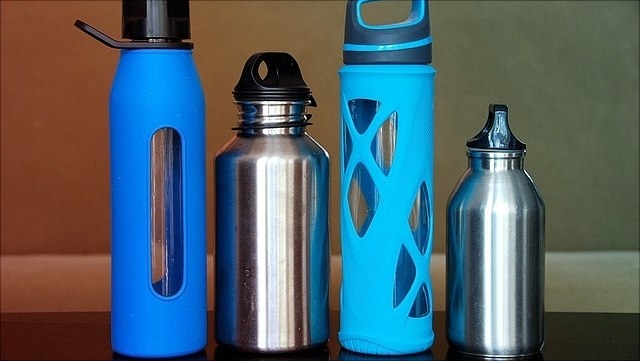
Foto: Evita Ochel/pixabay
  • Going Green - Nachhaltiges Veranstaltungsmanagement

  • The Basics
  • Fields of action
  • Greenpoints
    • University Buildings
    • Water dispenser
      • Waste management
      • Catering
      • Check-in
      • Audimax
      • Activity area
      • Outdoor Campus

    Verändert am 27. März 2026

    • Feedback
    • Impressum
    • Datenschutzerklärung
    • Barrierefreiheit
    • Sitemap

    Universität Hamburg

    Innovating and Cooperating for a Sustainable Future in a Digital Age

    • Folge uns auf Instagram.
    • Folge uns auf Facebook.
    • Vernetze dich mit uns auf LinkedIn.
    • Folge uns auf Mastodon.
    • Folge uns auf Bluesky.
    • Abonniere unseren Kanal auf YouTube.
      • Studium an der UHH
      • Studieninteressierte
      • Weiterbildung
      • Forschung an der UHH
      • Lehre an der UHH
      • Promovieren
      • Karriere & Stellenangebote
      • Transfer
      • Universität
      • Exzellenz
      • Nachhaltigkeit
      • Fakultäten
      • Alumni-Netzwerk
      • Kontakt
      • Campus-Karte
      • UHHApp
      • Notfall & Sicherheit
      • Antidiskriminierung
    Zur Seite Audit familiengerechte Hochschule
    Zur Seite Audit Internationalisierung
    Zur Seite Audit Nachhaltigkeit
    Zur Seite Diversity-Audit
    Zur Seite Systemakkreditierung

    © 2026 Universität Hamburg. Alle Rechte vorbehalten