• Zur Metanavigation
  • Zur Hauptnavigation
  • Zur Suche
  • Zum Inhalt
  • Zur Subnavigation
  • Zum Seitenfuß
  • Universität Hamburg
  • Presse
  • KUS-Portal0
  • STiNE
https://www.kus.uni-hamburg.de/aktuelles.json?recentnews=true
  • Einrichtungen und Zielgruppen
    • Einrichtungen
      • Fakultäten

        • Fakultät für Rechtswissenschaft
        • Fakultät für Wirtschafts- und Sozialwissenschaften
        • Medizinische Fakultät
        • Fakultät für Erziehungswissenschaft
        • Fakultät für Geisteswissenschaften
        • Fakultät für Mathematik, Informatik und Naturwissenschaften
        • Fakultät für Psychologie und Bewegungswissenschaft
        • University of Hamburg Business School
      • Dienste

        • STiNE
        • Surfmail
        • Exchange
        • KUS-Portal
        • Lernplattformen
        • Katalogplus
        • SharePoint
      • Einrichtungen für Studierende

        • Campus-Center
        • Career-Center
        • PIASTA
        • AStA
        • Hochschulsport
        • Universitätsmusik
        • Familienbüro
        • Sprachenzentrum
        • Allgemeinsprachen
        • Koordination der Belange von Studierenden mit Beeinträchtigungen
        • Bibliotheken
        • Healthy Campus
      • Weitere Einrichtungen

        • Exzellenzcluster CLICCS
        • Exzellenzcluster CUI
        • Exzellenzcluster Quantum Universe
        • Exzellenzcluster Understanding Written Artefacts
        • Hamburg Research Academy
        • Pier Plus
        • Hamburger Zentrum für Universitäres Lehren und Lernen (HUL)
        • Hub for Crossdisciplinary Learning (HCL)
        • Centrum für Erdsystemforschung und Nachhaltigkeit (CEN)
        • Museen und Sammlungen
        • Universitätsarchiv
        • Regionales Rechenzentrum (RRZ)
        • Präsidialverwaltung
        • Transferagentur
        • Unikontor
    • Zielgruppen

      • Studieninteressierte
      • Studierende
      • Internationale
      • Promovierende
      • Forschende
      • Lehrende
      • Beschäftigte (KUS)
      • Weiterbildungsinteressierte
      • Alumni
      • Presse
      • Geflüchtete
    Schließen
  • Gebärdensprache
  • Leichte Sprache
  • /sitemap.json
    GebärdenspracheLeichte Sprache
Universität Hamburg - der Forschung, der Lehre, der Bildung, zur Homepage

Migration und Bildung

ArbeitsbereichMigration und Bildung
  • Aktuelles
    • Neues aus dem Arbeitsbereich
    • Neuerscheinungen
  • Team
  • Forschung
    • Laufende Projekte
    • Archiv abgeschlossener Projekte
    • Forschungszentrum LiDS
  • Studium
    • Horizonte-Stipendium
    • Masterstudiengang MOTION
    • DiCot-Seminar - Vorbereitung Orientierungspraktikum
    • Seminare im KP zur Sprachbildung
    • TheaterSprachCamp im Modul Orientierungspraktikum
  • Publikationen
  • Service & Material
    • Analyseinstrument ELA
    • Glossar sprachliche Bildung in Netzwerken
    • Going Green - Nachhaltiges Veranstaltungsmanagement
    • Handout gendergerechte Sprache
    • MIKS Praxisbeispiele
    • Praxisorientierte Broschüre "Mehrsprachigkeit"
    • Praxisseite Mehrsprachigkeit
    • Seminarbausteine zu sprachlicher Bildung in sprachlich heterogenen Schulklassen
    • Video über "Mehrsprachigkeit"
    • Welcome Service für internationale Forschende

Foto: UHH/Scholz

  1. UHH
  2. Fakultät für Erziehungswissenschaft
  3. Einrichtungen
  4. EW1
  5. Migration und Bildung
  6. Service & Material
  7. Going Green - Nachhaltiges Veranstaltungsmanagement
  8. Greenpoints
  9. Catering
  10. Waste management

Waste management

Avoiding waste
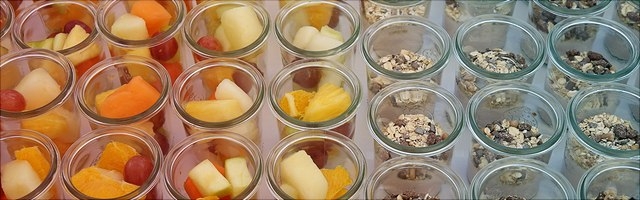
Foto: UHH/Scholz

One-way products like plastic plates, straws and plastic cutlery are used only for a few minutes, but never biodegrade completely if they end up in nature. Instead, they split up into increasingly small parts – micro plastics. These particles frequently end up in the stomach of animals. E.g. the Northern Fulmar, a bird that collects its food from the surface of the North Sea, has nearly always (93-97%) plastic in its stomach when found dead on the beach.
And if plastic dishes are collected in bins, they are often too dirty to be recycled and are sent for ‘thermal use’ instead.
From 2021 on, the EU plans to ban such one-way products. At ECER, we have banned them already and hope you will support this by avoiding them likewise, if you buy food outside of what ECER offers.

Single-serving packages of coffee cream, sugar, salt, butter, jam, etc. might be convenient and hygienic, but contribute with 256,000 tons unnecessarily to the 18 million tons of annual packaging waste in Germany . For a single serving of coffee cream, for instance, 38.4% more packaging is needed than for a 200g pot of cream.

Foto: UHH/Giesselmann

You have received a coffee cup for free refills within the ECER grounds – please use it and help us to reduce the mountain of single-use coffee cups that pile up every day (about 85 tons per day in Germany only)! You might think that a coffee cup is made of paper and therefore not much of a problem. But since coffee cups are for the most part made of virgin material, five trees are cut down to produce the 320,000 coffee cups that are used in Germany per hour (about 43,000 trees per year). Moreover, such cups are coated with polyethylene, which makes them hard to recycle. To produce the coffee-to-go cups used in Germany every year, 83,000 ton of CO² are emitted (not counting the plastic lids! More info here).

About 1/3 of all produced food is lost or goes to waste. This means a tremendous waste of energy, natural resources, land, labour and water. Everybody can contribute to reduce this share both at home and when eating out, like at the ECER.
Therefore: please take only the amount you really need and go rather several times to refill your plate than ending up with leftovers that have to be thrown away!

  • Going Green - Nachhaltiges Veranstaltungsmanagement

  • The Basics
  • Fields of action
  • Greenpoints
    • University Buildings
    • Water dispenser
    • Catering
      • Food and Beverages
      • Social responsibility
      • Waste management
      • Check-in
      • Audimax
      • Activity area
      • Outdoor Campus

    Verändert am 27. März 2026

    • Feedback
    • Impressum
    • Datenschutzerklärung
    • Barrierefreiheit
    • Sitemap

    Universität Hamburg

    Innovating and Cooperating for a Sustainable Future in a Digital Age

    • Folge uns auf Instagram.
    • Folge uns auf Facebook.
    • Vernetze dich mit uns auf LinkedIn.
    • Folge uns auf Mastodon.
    • Folge uns auf Bluesky.
    • Abonniere unseren Kanal auf YouTube.
      • Studium an der UHH
      • Studieninteressierte
      • Weiterbildung
      • Forschung an der UHH
      • Lehre an der UHH
      • Promovieren
      • Karriere & Stellenangebote
      • Transfer
      • Universität
      • Exzellenz
      • Nachhaltigkeit
      • Fakultäten
      • Alumni-Netzwerk
      • Kontakt
      • Campus-Karte
      • UHHApp
      • Notfall & Sicherheit
      • Antidiskriminierung
    Zur Seite Audit familiengerechte Hochschule
    Zur Seite Audit Internationalisierung
    Zur Seite Audit Nachhaltigkeit
    Zur Seite Diversity-Audit
    Zur Seite Systemakkreditierung

    © 2026 Universität Hamburg. Alle Rechte vorbehalten