
PD Dr. Daniel Kasper
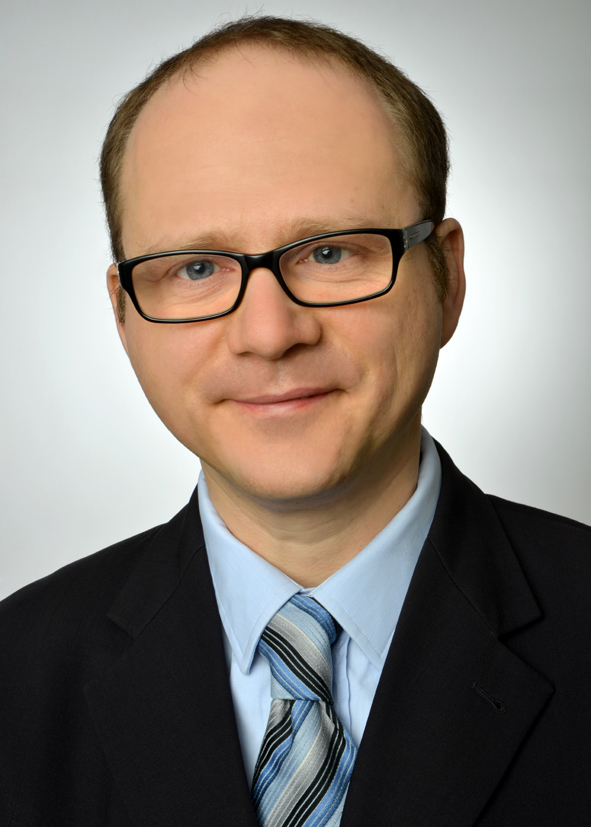
Senior Research Scientist
Evaluation of Education Systems / TIMSS 2027
Address
University of Hamburg
Faculty of Education
Department of General, Intercultural and International Comparative Education as well as Educational Psychology (EW1)
Postal address: Von-Melle-Park 8, 20146 Hamburg
Visiting address: Alsterterrasse 1, 20354 Hamburg
Office
Alsterterrasse 1
Room: 012
Office hours
- by prior arrangement via email
Contact
Tel: +49 40 239 527 559
Fax: +49 40 42838 2709
ORCID: 0000-0002-2804-1256
Research Interests
- Evaluation of education systems
- Primary education research
- Educational disparities
- Psychometrics
- Statistics
Professional Career
| Period | Position |
| 2021 | Visiting Professor of Methods in Empirical Educational Research, University of Graz |
| Since 2017 | Postdoctoral Researcher in Statistical Data Analysis and Methodological Development, Faculty of Education, Universität Hamburg |
| 2014–2017 | Postdoctoral Researcher in Statistical Data Analysis and Methodological Development, Faculty of Education, Psychology and Sociology, Institute for School Development Research, TU Dortmund University |
| 2012–2013 | Postdoctoral Researcher in Statistical Method Development, Chair of Methods in Empirical Educational Research, TUM School of Education (Technical University of Munich) |
| 2010–2012 | Research Associate in Statistical Data Analysis, Faculty of Education, Psychology and Sociology, Institute for School Development Research, TU Dortmund University |
| 2007–2009 | Research Associate in Statistical Data Analysis, Institute for Applied Family, Childhood and Youth Research (IFK), University of Potsdam |
Academic Qualifications
| Period | Qualification |
| 2012–2020 | Habilitation in Education with a focus on Empirical Educational Research, Faculty of Education, Psychology and Sociology, TU Dortmund University |
| 2010–2012 | Doctorate (Dr. phil.) in Education, Faculty of Education, Psychology and Sociology, TU Dortmund University |
| 2001–2007 | Diploma (Diplom) in Education, Faculty of Education and Social Work, University of Münster |
List of Publications
References follow APA 7th edition. Titles of German-language works are given in the original with an English translation in square brackets. The author’s own name is set in bold throughout.
Peer-Reviewed Journal Articles
- Kasper, D., Schulz-Heidorf, K., & Schwippert, K. (2025). %SURVEYHLM: A SAS macro for multilevel analysis with large-scale educational assessment data. Journal of Statistical Software, 113(5), 1–55. https://doi.org/10.18637/jss.v113.i05
- Kasper, D., Schulz-Heidorf, K., & Schwippert, K. (2024). Multiple group comparisons of the fixed and random effects from the generalized linear mixed model. Sociological Methods & Research, 53(1), 1–57. https://doi.org/10.1177/0049124120986182
- Bergold, S., Kasper, D., Wendt, H., & Steinmayr, R. (2019). Being bullied at school: The case of high-achieving boys. Social Psychology of Education, 23(Suppl. 2), 315–338. https://doi.org/10.1007/s11218-019-09539-w
- Schurig, M., & Kasper, D. (2018). Zur Interpretation von Messfehlern aus Sicht der Erziehungswissenschaft [On the interpretation of measurement error from an educational science perspective]. Erziehungswissenschaft, 29(1), 45–53. https://doi.org/10.3224/ezw.v29i1.06
- Bergold, S., Wendt, H., Kasper, D., & Steinmayr, R. (2017). Academic competencies: Their interrelatedness and gender differences at their high end. Journal of Educational Psychology, 109(3), 439–449. https://doi.org/10.1037/edu0000140
- Wendt, H., Kasper, D., & Trendtel, M. (2017). Assuming measurement invariance of background indicators in international comparative educational achievement studies: A challenge for the interpretation of achievement differences. Large-scale Assessments in Education, 5(10), 1–34. https://doi.org/10.1186/s40536-017-0043-9
- Smith, D. S., Wendt, H., & Kasper, D. (2016). Social reproduction and sex in German primary schools. Compare: A Journal of Comparative and International Education, 47(2), 240–256. https://doi.org/10.1080/03057925.2016.1158643
- Walzebug, A., & Kasper, D. (2016). Distributional properties of the PIRLS-home resource for learning scale and observed effects on reading achievement: Are measures of educational inequalities by latent indices without bias? Assessment in Education: Principles, Policy & Practice, 25(1), 28–51. https://doi.org/10.1080/0969594X.2016.1269055
- Wendt, H., & Kasper, D. (2016). Subject-specific strength and weaknesses of fourth-grade students in Europe: A comparative latent profile analysis of multidimensional proficiency patterns based on PIRLS/TIMSS combined 2011. Large-scale Assessments in Education, 4(14). https://doi.org/10.1186/s40536-016-0026-2
- Rieck, K., Dalehefte, I. M., Wendt, H., & Kasper, D. (2015). Wie schneidet das Unterrichtsentwicklungsprogramm SINUS an Grundschulen im Vergleich zu TIMSS 2011 ab? Evaluation der naturwissenschaftsbezogenen Daten [How does the SINUS instructional development programme in primary schools compare with TIMSS 2011? Evaluation of the science-related data]. Zeitschrift für Grundschulforschung, 8(1).
- Kasper, D., & Ünlü, A. (2013). On the relevance of assumptions associated with classical factor analytic approaches. Frontiers in Psychology, 4(109), 1–20. https://doi.org/10.3389/fpsyg.2013.00109
Books and Edited Volumes
- Schwippert, K., Kasper, D., Eickelmann, B., Goldhammer, F., Köller, O., Selter, C., & Steffensky, M. (Eds.). (2024). TIMSS 2023: Mathematische und naturwissenschaftliche Kompetenzen von Grundschulkindern in Deutschland im internationalen Vergleich [TIMSS 2023: Mathematics and science competencies of primary school children in Germany in international comparison]. Waxmann.
- Schwippert, K., Kasper, D., Köller, O., McElvany, N., Selter, C., Steffensky, M., & Wendt, H. (Eds.). (2020). TIMSS 2019: Mathematische und naturwissenschaftliche Kompetenzen von Grundschulkindern in Deutschland im internationalen Vergleich [TIMSS 2019: Mathematics and science competencies of primary school children in Germany in international comparison]. Waxmann.
- Hußmann, A., Wendt, H., Bos, W., Bremerich-Vos, A., Kasper, D., Lankes, E.-M., McElvany, N., Stubbe, T. C., & Valtin, R. (Eds.). (2017). IGLU 2016: Lesekompetenzen von Grundschulkindern in Deutschland im internationalen Vergleich [PIRLS 2016: Reading competencies of primary school children in Germany in international comparison]. Waxmann.
- Wendt, H., Bos, W., Selter, C., Köller, O., Schwippert, K., & Kasper, D. (Eds.). (2016). TIMSS 2015: Mathematische und naturwissenschaftliche Kompetenzen von Grundschulkindern in Deutschland im internationalen Vergleich [TIMSS 2015: Mathematics and science competencies of primary school children in Germany in international comparison]. Waxmann.
- Mörl, S., Kasper, D., & Sturzbecher, D. (2008). Validierung und Weiterentwicklung der Pädagogisch qualifizierten Fahrschulüberwachung (PQFÜ) [Validation and further development of pedagogically qualified driving-school supervision]. IPV GmbH.
- Sturzbecher, D., Kasper, D., Bönninger, J., & Rüdel, M. (2008). Evaluation der Theoretischen Fahrerlaubnisprüfung: Methodische Konzeption und Ergebnisse des Revisionsprojekts [Evaluation of the theoretical driving licence examination: Methodological design and results of the revision project]. TÜV | DEKRA arge tp 21.
- Kasper, D. (2006). Modelle der Faktorenanalyse: Kovarianzstrukturanalysen mit dem COSAN-Modell [Models of factor analysis: Covariance structure analyses using the COSAN model]. Logos.
Book Chapters
- Beese, C., Scholz, L. A., Jusufi, D., Kasper, D., & Schwippert, K. (2024). Ziele, Anlage und Durchführung der Trends in International Mathematics and Science Study (TIMSS 2023) [Aims, design, and implementation of TIMSS 2023]. In K. Schwippert, D. Kasper, B. Eickelmann, F. Goldhammer, O. Köller, C. Selter, & M. Steffensky (Eds.), TIMSS 2023: Mathematische und naturwissenschaftliche Kompetenzen von Grundschulkindern in Deutschland im internationalen Vergleich (pp. 25–52). Waxmann.
- Kasper, D., Sierau, J., Schwippert, K., & Köller, O. (2024). Trends in der Schülerzusammensetzung und den mathematischen und naturwissenschaftlichen Kompetenzen am Ende der Grundschulzeit in Deutschland [Trends in student composition and in mathematics and science competencies at the end of primary school in Germany]. In K. Schwippert, D. Kasper, B. Eickelmann, F. Goldhammer, O. Köller, C. Selter, & M. Steffensky (Eds.), TIMSS 2023: Mathematische und naturwissenschaftliche Kompetenzen von Grundschulkindern in Deutschland im internationalen Vergleich (pp. 277–304). Waxmann.
- Schwippert, K., Kasper, D., Eickelmann, B., Goldhammer, F., Köller, O., Selter, C., & Steffensky, M. (2024). TIMSS 2023: Wichtige Ergebnisse im Überblick [TIMSS 2023: Key findings at a glance]. In K. Schwippert, D. Kasper, B. Eickelmann, F. Goldhammer, O. Köller, C. Selter, & M. Steffensky (Eds.), TIMSS 2023: Mathematische und naturwissenschaftliche Kompetenzen von Grundschulkindern in Deutschland im internationalen Vergleich (pp. 11–24). Waxmann.
- Selter, C., Walter, D., Heinze, A., Brandt, J., & Kasper, D. (2024). Mathematische Kompetenzen im internationalen Vergleich: Testkonzeption und Ergebnisse [Mathematics competencies in international comparison: Test design and results]. In K. Schwippert, D. Kasper, B. Eickelmann, F. Goldhammer, O. Köller, C. Selter, & M. Steffensky (Eds.), TIMSS 2023: Mathematische und naturwissenschaftliche Kompetenzen von Grundschulkindern in Deutschland im internationalen Vergleich (pp. 53–104). Waxmann.
- Wendt, H., Kasper, D., & Long, C. (2022). Changing trends in the role of South African math teachers’ qualification for student achievement: Findings from TIMSS 2003, 2011, 2015. In M. S. Khine (Ed.), Methodology for multilevel modeling in educational research: Concepts and applications (pp. 205–233). Springer Singapore. https://doi.org/10.1007/978-981-16-9142-3
- Kasper, D., Wendt, H., Schwippert, K., & Köller, O. (2020). Trends in Schülerzusammensetzungen und mathematischen und naturwissenschaftlichen Kompetenzen [Trends in student composition and in mathematics and science competencies]. In K. Schwippert, D. Kasper, O. Köller, N. McElvany, C. Selter, M. Steffensky, & H. Wendt (Eds.), TIMSS 2019: Mathematische und naturwissenschaftliche Kompetenzen von Grundschulkindern in Deutschland im internationalen Vergleich (pp. 331–349). Waxmann.
- Schwippert, K., Kasper, D., Köller, O., McElvany, N., Selter, C., Steffensky, M., & Wendt, H. (2020). TIMSS 2019: Wichtige Ergebnisse im Überblick [TIMSS 2019: Key findings at a glance]. In K. Schwippert, D. Kasper, O. Köller, N. McElvany, C. Selter, M. Steffensky, & H. Wendt (Eds.), TIMSS 2019: Mathematische und naturwissenschaftliche Kompetenzen von Grundschulkindern in Deutschland im internationalen Vergleich (pp. 13–24). Waxmann.
- Schwippert, K., Scholz, L. A., Beese, C., Kasper, D., Schulz-Heidorf, K., & Girelli, A.-L. (2020). Ziele, Anlage und Durchführung der Trends in International Mathematics and Science Study (TIMSS 2019) [Aims, design, and implementation of TIMSS 2019]. In K. Schwippert, D. Kasper, O. Köller, N. McElvany, C. Selter, M. Steffensky, & H. Wendt (Eds.), TIMSS 2019: Mathematische und naturwissenschaftliche Kompetenzen von Grundschulkindern in Deutschland im internationalen Vergleich (pp. 25–55). Waxmann.
- Steffensky, M., Scholz, L. A., Kasper, D., & Köller, O. (2020). Naturwissenschaftliche Kompetenzen im internationalen Vergleich: Testkonzeption und Ergebnisse [Science competencies in international comparison: Test design and results]. In K. Schwippert, D. Kasper, O. Köller, N. McElvany, C. Selter, M. Steffensky, & H. Wendt (Eds.), TIMSS 2019: Mathematische und naturwissenschaftliche Kompetenzen von Grundschulkindern in Deutschland im internationalen Vergleich (pp. 115–168). Waxmann.
- Stubbe, T. C., Kasper, D., & Jentsch, A. (2020). Schullaufbahnpräferenzen am Übergang in die Sekundarstufe und der Zusammenhang mit leistungsrelevanten und sozialen Merkmalen [School track preferences at the transition to secondary education and their association with achievement-related and social characteristics]. In K. Schwippert, D. Kasper, O. Köller, N. McElvany, C. Selter, M. Steffensky, & H. Wendt (Eds.), TIMSS 2019: Mathematische und naturwissenschaftliche Kompetenzen von Grundschulkindern in Deutschland im internationalen Vergleich (pp. 315–330). Waxmann.
- Hußmann, A., Stubbe, T. C., & Kasper, D. (2017). Soziale Herkunft und Lesekompetenzen von Schülerinnen und Schülern [Social background and students’ reading competencies]. In A. Hußmann, H. Wendt, W. Bos, A. Bremerich-Vos, D. Kasper, E.-M. Lankes, N. McElvany, T. C. Stubbe, & R. Valtin (Eds.), IGLU 2016: Lesekompetenzen von Grundschulkindern in Deutschland im internationalen Vergleich (pp. 195–218). Waxmann.
- Hußmann, A., Wendt, H., Kasper, D., Bos, W., & Goy, M. (2017). Ziele, Anlage und Durchführung der Internationalen Grundschul-Lese-Untersuchung (IGLU 2016) [Aims, design, and implementation of PIRLS 2016]. In A. Hußmann, H. Wendt, W. Bos, A. Bremerich-Vos, D. Kasper, E.-M. Lankes, N. McElvany, T. C. Stubbe, & R. Valtin (Eds.), IGLU 2016: Lesekompetenzen von Grundschulkindern in Deutschland im internationalen Vergleich (pp. 29–78). Waxmann.
- McElvany, N., Kessels, U., Schwabe, F., & Kasper, D. (2017). Geschlecht und Lesekompetenz [Gender and reading competence]. In A. Hußmann, H. Wendt, W. Bos, A. Bremerich-Vos, D. Kasper, E.-M. Lankes, N. McElvany, T. C. Stubbe, & R. Valtin (Eds.), IGLU 2016: Lesekompetenzen von Grundschulkindern in Deutschland im internationalen Vergleich (pp. 177–194). Waxmann.
- Wendt, H., Kasper, D., Bos, W., Vennemann, M., & Goy, M. (2017). Wie viele Punkte auf der TIMSS-Metrik entsprechen einem Lernjahr? Leistungszuwächse in Mathematik und Naturwissenschaften am Ende der Grundschulzeit [How many points on the TIMSS metric correspond to one year of learning? Achievement gains in mathematics and science at the end of primary school]. In T. Eckert & B. Gniewosz (Eds.), Bildungsgerechtigkeit (pp. 121–153). VS Verlag für Sozialwissenschaften.
- Bos, W., Wendt, H., Köller, O., Selter, C., Schwippert, K., & Kasper, D. (2016). TIMSS 2015: Wichtige Ergebnisse im Überblick [TIMSS 2015: Key findings at a glance]. In H. Wendt, W. Bos, C. Selter, O. Köller, K. Schwippert, & D. Kasper (Eds.), TIMSS 2015: Mathematische und naturwissenschaftliche Kompetenzen von Grundschulkindern in Deutschland im internationalen Vergleich (pp. 13–30). Waxmann.
- Kasper, D., Wendt, H., Bos, W., & Köller, O. (2016). Trends in mathematischen und naturwissenschaftlichen Kompetenzen am Ende der Grundschulzeit in Deutschland [Trends in mathematics and science competencies at the end of primary school in Germany]. In H. Wendt, W. Bos, C. Selter, O. Köller, K. Schwippert, & D. Kasper (Eds.), TIMSS 2015: Mathematische und naturwissenschaftliche Kompetenzen von Grundschulkindern in Deutschland im internationalen Vergleich (pp. 367–382). Waxmann.
- Stahns, R., Walzebug, A., & Kasper, D. (2016). (Bildungs-)sprachliche Anforderungen und Aufgabenschwierigkeit in Sachtext-Leseitems der Internationalen Grundschul-Lese-Untersuchung (IGLU 2011) [(Academic) language demands and item difficulty in informational-text reading items of PIRLS 2011]. In R. Strietholt, W. Bos, H. G. Holtappels, & N. McElvany (Eds.), Jahrbuch der Schulentwicklung (Vol. 19, pp. 57–83). BELTZ Juventa.
- Steffensky, M., Kleickmann, T., Kasper, D., & Köller, O. (2016). Naturwissenschaftliche Kompetenzen im internationalen Vergleich: Testkonzeption und Ergebnisse [Science competencies in international comparison: Test design and results]. In H. Wendt, W. Bos, C. Selter, O. Köller, K. Schwippert, & D. Kasper (Eds.), TIMSS 2015: Mathematische und naturwissenschaftliche Kompetenzen von Grundschulkindern in Deutschland im internationalen Vergleich (pp. 137–188). Waxmann.
- Stubbe, T. C., Lorenz, J., Bos, W., & Kasper, D. (2016). Der Übergang von der Primar- in die Sekundarstufe [The transition from primary to secondary education]. In H. Wendt, W. Bos, C. Selter, O. Köller, K. Schwippert, & D. Kasper (Eds.), TIMSS 2015: Mathematische und naturwissenschaftliche Kompetenzen von Grundschulkindern in Deutschland im internationalen Vergleich (pp. 351–366). Waxmann.
- Wendt, H., Bos, W., Kasper, D., Walzebug, A., Goy, M., & Jusufi, D. (2016). Ziele, Anlage und Durchführung der Trends in International Mathematics and Science Study (TIMSS 2015) [Aims, design, and implementation of TIMSS 2015]. In H. Wendt, W. Bos, C. Selter, O. Köller, K. Schwippert, & D. Kasper (Eds.), TIMSS 2015: Mathematische und naturwissenschaftliche Kompetenzen von Grundschulkindern in Deutschland im internationalen Vergleich (pp. 31–78). Waxmann.
- Wendt, H., Steinmayr, R., & Kasper, D. (2016). Geschlechterunterschiede in mathematischen und naturwissenschaftlichen Kompetenzen [Gender differences in mathematics and science competencies]. In H. Wendt, W. Bos, C. Selter, O. Köller, K. Schwippert, & D. Kasper (Eds.), TIMSS 2015: Mathematische und naturwissenschaftliche Kompetenzen von Grundschulkindern in Deutschland im internationalen Vergleich (pp. 257–298). Waxmann.
- Frey, K., Wendt, H., & Kasper, D. (2015). Soziale Kompetenz von Grundschulkindern in Deutschland [Social competence of primary school children in Germany]. In H. Wendt, T. C. Stubbe, K. Schwippert, & W. Bos (Eds.), 10 Jahre international vergleichende Schulleistungsforschung in der Grundschule: Vertiefende Analysen zu IGLU und TIMSS 2001 bis 2011 (pp. 55–76). Waxmann.
- Hoeft, M., Wendt, H., & Kasper, D. (2015). Familiäre Lernumwelten in Europa: Zusammenhänge formeller und informeller häuslicher Aktivitäten zwischen Eltern und Kindern im Vorschulalter in den Förderdimensionen Early Literacy und Early Numeracy [Family learning environments in Europe: Associations between formal and informal home activities of parents and preschool children in the domains of early literacy and early numeracy]. In H. Wendt, T. C. Stubbe, K. Schwippert, & W. Bos (Eds.), 10 Jahre international vergleichende Schulleistungsforschung in der Grundschule: Vertiefende Analysen zu IGLU und TIMSS 2001 bis 2011 (pp. 135–160). Waxmann.
- Kasper, D., & Ünlü, A. (2015). Eigenwertzerlegung [Eigenvalue decomposition]. In R. Diaz-Bone & C. Weischer (Eds.), Methoden-Lexikon für die Sozialwissenschaften (p. 99). VS Verlag für Sozialwissenschaften.
- Kasper, D., & Ünlü, A. (2015). Logarithmus [Logarithm]. In R. Diaz-Bone & C. Weischer (Eds.), Methoden-Lexikon für die Sozialwissenschaften (p. 100). VS Verlag für Sozialwissenschaften.
- Schurig, M., Wendt, H., Kasper, D., & Bos, W. (2015). Fachspezifische Stärken und Schwächen von Viertklässlern in Deutschland und im europäischen Vergleich [Subject-specific strengths and weaknesses of fourth-graders in Germany and in European comparison]. In H. Wendt, T. C. Stubbe, K. Schwippert, & W. Bos (Eds.), 10 Jahre international vergleichende Schulleistungsforschung in der Grundschule: Vertiefende Analysen zu IGLU und TIMSS 2001 bis 2011 (pp. 35–54). Waxmann.
- Kasper, D., Ünlü, A., & Gschrey, B. (2014). Sensitivity analyses for the mixed coefficients multinomial logit model. In M. Spiliopoulou, L. Schmidt-Thieme, & R. Janning (Eds.), Data analysis, machine learning and knowledge discovery (pp. 389–396). Springer.
- Trendtel, M., Ünlü, A., Kasper, D., & Stubben, S. (2014). Using latent class models with random effects for investigating local dependence. In M. Spiliopoulou, L. Schmidt-Thieme, & R. Janning (Eds.), Data analysis, machine learning and knowledge discovery (pp. 407–416). Springer.
- Ünlü, A., Kasper, D., Trendtel, M., & Schurig, M. (2014). The OECD’s Programme for International Student Assessment (PISA) study: A review of its basic psychometric concepts. In M. Spiliopoulou, L. Schmidt-Thieme, & R. Janning (Eds.), Data analysis, machine learning and knowledge discovery (pp. 417–425). Springer.
- Bos, W., Wendt, H., Ünlü, A., Valtin, R., Euen, B., Kasper, D., & Tarelli, I. (2012). Leistungsprofile von Viertklässlerinnen und Viertklässlern in Deutschland [Achievement profiles of fourth-graders in Germany]. In W. Bos, H. Wendt, O. Köller, & C. Selter (Eds.), TIMSS 2011: Mathematische und naturwissenschaftliche Kompetenzen von Grundschulkindern in Deutschland im internationalen Vergleich (pp. 269–301). Waxmann.
- Bos, W., Wendt, H., Ünlü, A., Valtin, R., Euen, B., Kasper, D., & Tarelli, I. (2012). Leistungsprofile von Viertklässlerinnen und Viertklässlern in Deutschland [Achievement profiles of fourth-graders in Germany]. In W. Bos, I. Tarelli, A. Bremerich-Vos, & K. Schwippert (Eds.), IGLU 2011: Lesekompetenzen von Grundschulkindern in Deutschland im internationalen Vergleich (pp. 227–259). Waxmann.
Doctoral Dissertation
- Kasper, D. (2012). Faktorenanalyse auf dem Prüfstand: Zum Zusammenhang zwischen der Verteilung der Fähigkeitswerte und der Schätzgenauigkeit klassischer Faktorenmodelle [Factor analysis put to the test: On the relationship between the distribution of ability scores and the estimation accuracy of classical factor models] [Doctoral dissertation, TU Dortmund University]. Eldorado – Repositorium der TU Dortmund.
Manuscripts in Preparation and Under Review
- Kasper, D., & Schwippert, K. (2024). Resampling-based estimates of standard errors for multilevel models: Consistency and applicability [Manuscript in preparation].
- Kasper, D., Temel, G. Y., Beese, C., & Schwippert, K. (2024). Scale linkage approaches and the validity of predictions [Manuscript in preparation].
- van den Ham, A.-K., Heinze, A., Kasper, D., & Schwippert, K. (2024). The impact of textbook selection on mathematics achievement: Insights from German TIMSS Grade 4 data [Manuscript in preparation].
- Kasper, D. (2023). Using blockchain technology to store, process, search and encrypt large-scale assessment data [Proposal submitted for the special issue “The Present and Future of International Large-Scale Assessments for Monitoring Educational Systems”].
Presentations
Invited Talks
- Kasper, D. (2019). Multiple group comparisons of the fixed and random effects from the generalized linear mixed model. Invited talk at the College of Education, University of the Philippines.
Symposia
- Kyriakides, L., Kasper, D., van Damme, J., Nilsen, T., Bergem, O. K., Scherer, R., Kaarstein, H., Rieser, S., Wendt, H., Hole, A., & Grønmo, L. S. (2016). Assessing instructional quality in international large-scale assessments. Symposium at the European Conference on Educational Research (ECER).
- Kasper, D., Wendt, H., Walzebug, A., & Bos, W. (2014). TIMSS und PIRLS/IGLU 2011: Zusammenhang der Kompetenzen in den Domänen Lesen, Mathematik und Naturwissenschaften am Ende der Grundschulzeit [TIMSS and PIRLS 2011: associations between reading, mathematics and science competencies at the end of primary school]. Symposium at the conference of the Working Group for Empirical Educational Research (AEPF).
Individual Papers (Selection)
- Kasper, D., Güler, Y. T., & Schwippert, K. (2025). Scale linking and validity of predictions. Paper presented at the IEA International Research Conference (IRC).
- Neubauer, D., Wendt, H., & Kasper, D. (2023). On the use of inquiry-based instructional strategies in Austrian primary schools under teachers’ perception of classrooms’ characteristics. Paper presented at the IEA International Research Conference (IRC).
- Long, C., Wendt, H., & Kasper, D. (2018). Trends in qualification and participation in professional development of South African math teachers. Paper presented at the World Education Research Association (WERA) Conference.
- Steffensky, M., Kleickmann, T., Kasper, D., & Köller, O. (2017). Naturwissenschaftliche Kompetenzen in TIMSS 2015 [Science competencies in TIMSS 2015]. Paper presented at the conference of the Society for Empirical Educational Research (GEBF).
- Bergold, S., Kasper, D., Wendt, H., & Steinmayr, R. (2016). Geschlechtsunterschiede im oberen Bereich schulischer Leistungsfähigkeit: Eine personenzentrierte Analyse [Gender differences at the high end of academic achievement: a person-centred analysis]. Paper presented at the conference of the Society for Empirical Educational Research (GEBF).
- Doupona, M., Wendt, H., & Kasper, D. (2015). Who takes advantage? When boys outperform girls in reading. Paper presented at the European Conference on Educational Research (ECER).
- Smith, D. S., Kasper, D., & Wendt, H. (2014). School composition and student achievement in Germany: Another look at TIMSS/PIRLS 2011. Paper presented at the European Conference on Educational Research (ECER).
Projects
Current
- Trends in International Mathematics and Science Study (TIMSS 2027) — Mathematics and science competencies of primary school children in Germany in international comparison National Project Coordinator
Completed
- Trends in International Mathematics and Science Study (TIMSS 2023) — Mathematics and science competencies of primary school children in Germany in international comparison National Project Coordinator
- Trends in International Mathematics and Science Study (TIMSS 2019) — Mathematics and science competencies of primary school children in Germany in international comparison National Project Coordinator
- Ausschöpfung von Begabungsreserven [Realising untapped talent potential] — Identification of resources for achievement development Project Manager
- Progress in International Reading Literacy Study (PIRLS 2016) — Reading competencies of primary school children in Germany in international comparison Postdoctoral Researcher in Statistical Data Analysis and Methodological Development
- Trends in International Mathematics and Science Study (TIMSS 2015) — Mathematics and science competencies of primary school children in Germany in international comparison Postdoctoral Researcher in Statistical Data Analysis and Methodological Development
- Trends in International Mathematics and Science Study (TIMSS 2011) — Mathematics and science competencies of primary school children in Germany in international comparison Postdoctoral Researcher in Statistical Data Analysis and Methodological Development
- Progress in International Reading Literacy Study (PIRLS 2011) — Reading competencies of primary school children in Germany in international comparison Postdoctoral Researcher in Statistical Data Analysis and Methodological Development
- Panel Study at the Research School “Education and Capabilities” (PARS) in North Rhine-Westphalia — Identification of achievement trends in mathematics and science in lower secondary education Research Associate in Statistical Data Analysis
- SCHACHZUG – A study on chess as a school subject — Study on the relationship between chess as a school subject and academic achievement Research Associate in Statistical Data Analysis
- IEM – Implementation and Evaluation of Methods Training at Faculty 12, University of Dortmund — Evaluation of the implementation of methods training at Faculty 12, University of Dortmund Research Associate in Statistical Data Analysis
- Optimisation of the Theoretical Driving Licence Examination — Evaluation of the test items of the theoretical driving licence examination in Germany Project Manager
- Validation of Pedagogically Qualified Driving-School Supervision — Evaluation of driving-school supervision in Germany Project Manager
- Evaluation of Educational and Counselling Institutions in the City of Münster — Evaluation of the quality of educational and counselling institutions for families in Münster Intern
Teaching
Teaching experience by year, programme, title, language, type, frequency and contact hours per semester.
Bachelor’s Level
| Year | Title | L | T | F | H |
| 2022–2026 | Introduction to Empirical Research Methods | DE | LEC | 6 | 1 |
| 2017 | Research Methods and Evaluation | DE | SEM | 1 | 2 |
| 2014 | Statistical Methods | DE | SEM | 1 | 2 |
| 2012 | Software for Psychometric Data Analysis | DE | LEC | 1 | 2 |
Master’s Level
| Year | Title | L | T | F | H |
| 2021 | Methods of Empirical Educational Research | DE | SEM | 1 | 2 |
| 2021 | Research Methods and Evaluation | DE | SEM | 1 | 2 |
| 2018–2026 | Advanced Methods of Empirical Educational Research | DE | SEM | 8 | 2 |
| 2012 | Analysis of Categorical Data | DE | SEM | 1 | 2 |
| 2011–2018 | Structural Equation Models | DE | SEM | 6 | 2 |
Doctoral Level
| Year | Title | L | T | F | H |
| 2026 | Numerical Optimization for Marginal Maximum Likelihood Estimation | EN | LEC | 1 | 2 |
| 2018 | Scaling of Competencies in Longitudinal Designs | DE | WS | 1 | 8 |
| 2016 | Methods of Empirical Educational Research | EN | WS | 1 | 8 |
| 2016 | Generalized Linear Mixed Model | EN | SEM | 1 | 2 |
| 2015 | Scaling of Competencies in Longitudinal Designs | EN | WS | 1 | 8 |
| 2014–2017 | Introduction to the Rasch Model | DE | WS | 4 | 20 |
| 2012 | Jackknife and BRR Techniques for Complex Samples | EN | WS | 1 | 8 |
| 2012 | Introduction to R | EN | WS | 1 | 8 |
| 2011 | Hierarchical Linear Models | EN | SEM | 1 | 2 |
| 2011 | Introduction to Quantitative Methods | EN | SEM | 1 | 2 |
| 2010 | Mixed Methods in Empirical Educational Research | DE | SEM | 1 | 2 |
Abbreviations: L = language of instruction (EN: English, DE: German); T = type (LEC: lecture, SEM: seminar, WS: workshop); F = frequency; H = contact hours per week and semester.